
How AI Is Revolutionizing Dementia Diagnosis and Treatment
Dementia affects more than 55 million people worldwide, and that number is climbing. As populations age, healthcare systems face mounting pressure to detect cognitive decline earlier, deliver more personalized care, and support the millions of family members who carry much of the daily caregiving burden. Artificial intelligence is emerging as a genuinely useful partner in that effort — not a cure, but a tool that's quietly reshaping how we identify, monitor, and respond to this disease.
The Growing Challenge of Dementia in an Aging Population
Dementia is one of the most pressing public health challenges of the 21st century. The World Health Organization estimates that by 2050, the number of people living with dementia will nearly triple to 139 million, driven largely by an aging global population.
Traditional diagnostic pathways are slow and often catch the disease late. A person may experience years of subtle cognitive decline before receiving a formal diagnosis — time during which early intervention could have meaningfully slowed progression. Clinicians rely on cognitive tests, patient histories, and expensive imaging procedures, all of which require specialist access that many communities simply don't have.
This is exactly where AI-powered tools are beginning to fill critical gaps. By processing vast amounts of data faster than any human clinician, machine learning systems can identify patterns that signal early-stage dementia long before symptoms become obvious. The technology doesn't replace medical judgment — it sharpens it.
How AI Is Transforming Early Dementia Detection
AI is improving early dementia detection by identifying subtle patterns in speech, writing, and behavior that precede clinical symptoms by months or even years. This represents a fundamental shift from reactive diagnosis to proactive screening.
Researchers at institutions like MIT and the University of Toronto have developed machine learning models that analyze speech patterns — hesitations, word-finding pauses, vocabulary narrowing — with accuracy rates exceeding 80% for detecting early Alzheimer's disease. The model doesn't need an MRI; it needs a recorded conversation.
Other approaches analyze handwriting changes, eye movement patterns during reading tasks, and even the way a person types on a keyboard. These behavioral biomarkers accumulate quietly over time, and AI is uniquely suited to track them longitudinally across thousands of data points.
For caregivers and families, this matters because earlier detection means more time — time to plan, to access support services, to participate in clinical trials, and in some cases, to benefit from treatments that work best in the disease's early stages.
AI-Powered Brain Imaging and Diagnostic Tools
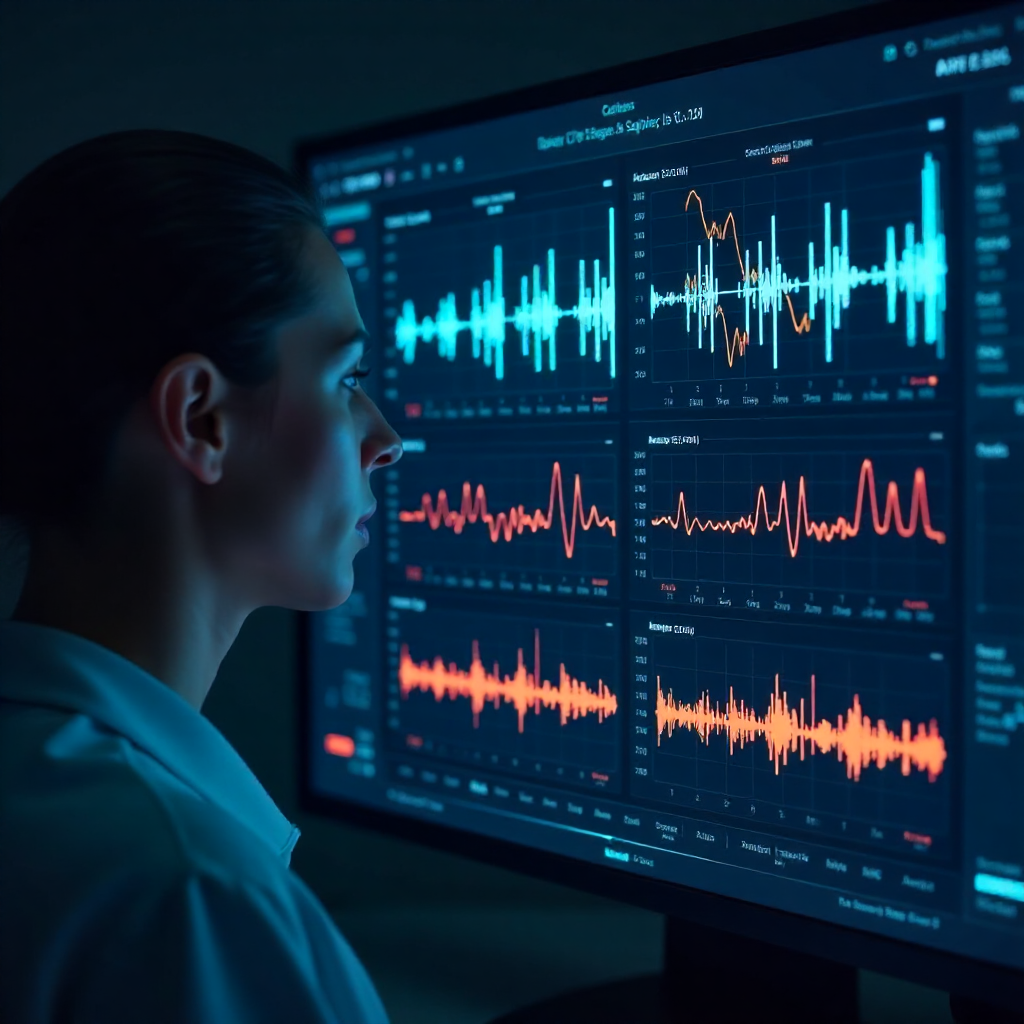
Machine learning has dramatically improved the analysis of neuroimaging data, allowing radiologists to detect Alzheimer's-related biomarkers years before a patient shows noticeable symptoms. This is one of the most clinically validated applications of AI in dementia care today.
Traditional brain imaging — MRI and PET scans — generates enormous amounts of data. A trained radiologist reviews these images manually, which is time-consuming and subject to human variability. AI systems trained on tens of thousands of scans can now flag amyloid plaques, tau protein accumulations, and hippocampal atrophy with a precision that complements expert review.
One notable example: a National Institutes of Health-supported study found that a deep learning algorithm identified Alzheimer's disease from PET scans with over 90% accuracy — and did so an average of six years before a clinical diagnosis was made by physicians reviewing the same data.
Predictive analytics built on neuroimaging data are also helping clinicians assess disease progression risk. Rather than a binary "has dementia / doesn't have dementia" determination, AI models can now generate probability scores across a spectrum, helping care teams prioritize monitoring and intervention for high-risk patients.
Wearables and Remote Monitoring: AI in Everyday Dementia Care
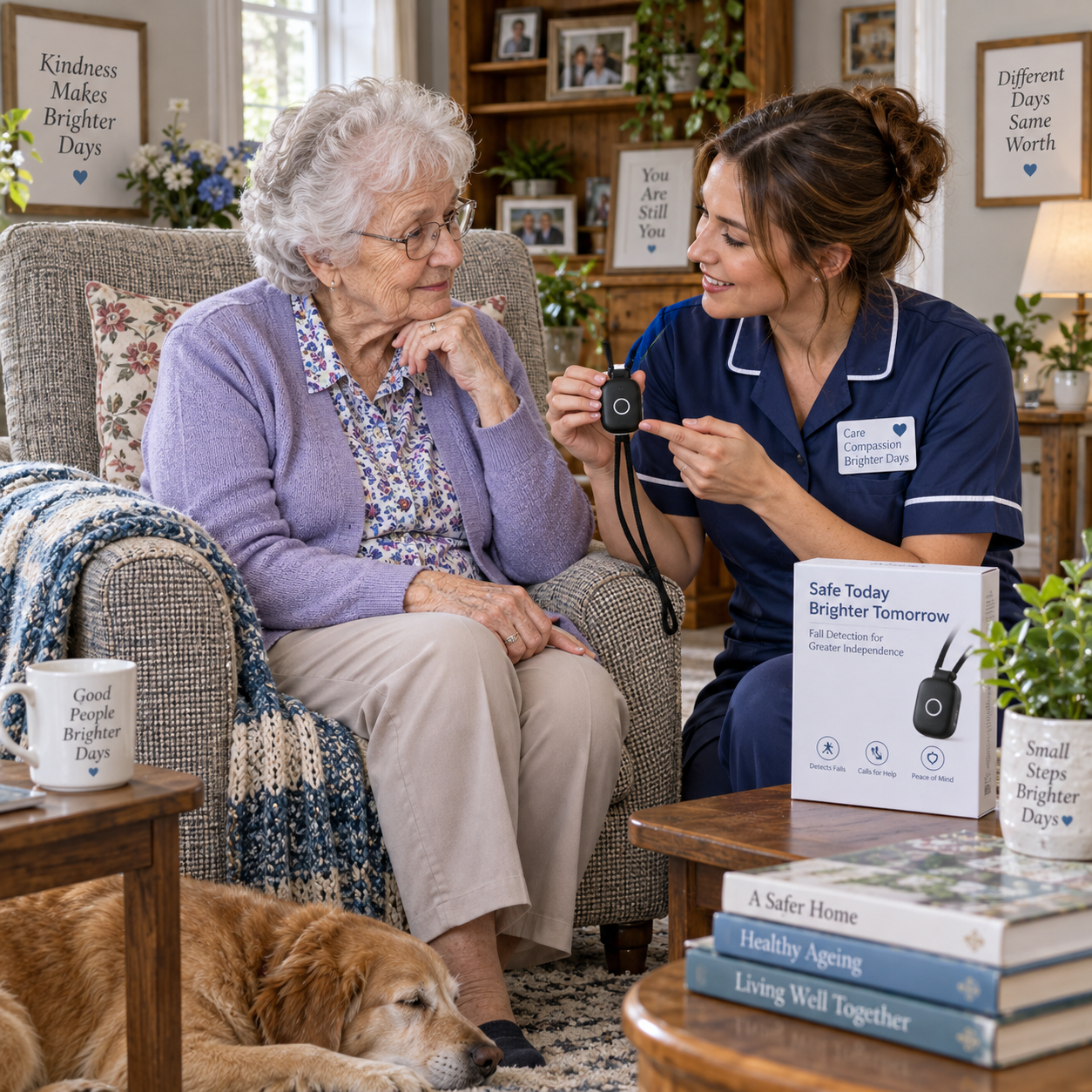
Wearable technology and smart home sensors, combined with AI analysis, are making it possible to monitor dementia patients continuously — without requiring them to visit a clinic. For families managing care at home or in residential settings, this is a practical game-changer.
Devices like smartwatches and GPS trackers can monitor sleep quality, physical activity levels, heart rate variability, and movement patterns. When integrated with AI, these data streams become diagnostic signals. A sudden change in sleep architecture or a significant drop in daily step count can trigger an alert to caregivers before a visible behavioral crisis occurs.
Smart home systems take this further. Passive sensors track whether a person opened the refrigerator, took their medication, or moved through the house in their usual patterns. AI algorithms establish individual behavioral baselines and flag deviations — a missed meal routine, prolonged inactivity, or nighttime wandering — in real time.
The practical benefit for dementia caregivers is significant: fewer emergency situations, earlier responses to health changes, and reduced anxiety about what's happening when they can't be physically present. Choosing these systems does mean accepting trade-offs around data collection and privacy, which we'll address shortly.
Personalizing Treatment Plans With Predictive AI
AI helps clinicians design more personalized dementia care plans by analyzing individual patient data — genetics, imaging results, behavioral patterns, and medication responses — to predict how a person's condition is likely to progress. One-size-fits-all approaches are increasingly giving way to tailored interventions.
Predictive models can identify which patients are likely to decline rapidly versus those who may remain stable for years. This allows care teams to allocate resources more efficiently and adjust treatment intensity before a crisis point. For example, a patient flagged as high-risk for accelerated cognitive decline might be prioritized for more frequent cognitive assessments and earlier referral to specialist memory services.
AI is also being used to optimize medication management. Dementia patients often take multiple drugs, and interactions are a serious concern. Machine learning tools can cross-reference a patient's complete medication list against known interaction databases and flag risks that might otherwise be missed in a busy clinical environment.
The result isn't a robot making care decisions — it's a clinician with better information, making faster and more confident decisions. That distinction matters for trust in these systems.
Supporting Caregivers Through AI-Driven Tools
AI tools are reducing caregiver burden by providing real-time decision support, emotional resources, and administrative assistance that would otherwise fall entirely on family members or care home staff. Caregiver burnout is a serious problem in dementia support, and technology is beginning to address it directly.
Several apps now use AI to help caregivers track behavioral changes, log daily observations, and receive personalized suggestions for managing difficult symptoms like agitation or sleep disturbance. These aren't generic tip sheets — they're responses calibrated to the specific behaviors logged for that individual patient.
AI-powered chatbots are also being deployed as first-response support tools for caregivers who need guidance at 2am when no helpline is open. While these tools can't replace human counseling, they provide immediate, evidence-based responses to common caregiving challenges and can escalate to human support when needed.
For care home staff, AI decision-support platforms are helping with shift handovers, flagging residents whose condition has changed overnight and summarizing relevant observations so no critical detail gets lost between teams. This kind of systematic information transfer reduces errors and improves continuity of care in ways that manual processes often can't guarantee.
Challenges, Limitations, and the Road Ahead
AI in dementia care is genuinely promising, but it comes with real limitations that anyone considering these tools should understand. Clinical validation, data privacy, and equitable access are the three most significant barriers right now.
Most AI diagnostic tools have been developed and tested on datasets that skew toward certain demographics — often white, Western, and higher-educated populations. A model trained on this data may perform less accurately for patients from different ethnic or socioeconomic backgrounds. This is an active area of concern among researchers, and it's one reason why global health organizations are pushing for more diverse training datasets before widespread clinical deployment.
Data privacy is another legitimate concern. Continuous monitoring through wearables and smart home sensors generates sensitive health data that must be stored, transmitted, and protected. Families and care homes need to ask hard questions about who owns that data, how it's used, and what happens if a company changes its policies or is acquired.
Finally, access isn't equal. Sophisticated AI tools tend to reach well-resourced healthcare systems first. Rural communities, lower-income families, and care homes operating on tight budgets may be the last to benefit — even though they often face the greatest caregiving challenges.
None of this negates the genuine progress being made. It means the field needs to develop responsibly, with equity and transparency built in from the start rather than added as an afterthought.
Frequently Asked Questions
Can AI diagnose dementia on its own, or does it assist doctors?
AI assists doctors rather than replacing them. Current AI tools analyze data and flag patterns, but a formal dementia diagnosis requires clinical evaluation by a qualified physician. AI improves diagnostic speed and accuracy — it doesn't make the final call.
What types of AI tools are currently available for dementia care at home?
Available tools include GPS-enabled wearables that track location and activity, smart home sensor systems that monitor daily routines, medication management apps with AI reminders, and caregiver support apps that log behavioral changes and offer personalized guidance. Availability varies by country and budget.
How accurate is AI in detecting early signs of Alzheimer's disease?
Accuracy varies by method. Speech-based AI models have shown accuracy rates above 80% in research settings. Deep learning analysis of PET brain scans has exceeded 90% accuracy in some studies. However, real-world performance in diverse populations is still being validated.
Is AI-powered dementia care accessible for families and care homes?
Some tools — particularly consumer wearables and smartphone apps — are relatively affordable and accessible. More advanced diagnostic AI remains largely within specialist clinical settings. Accessibility is improving, but significant gaps remain, particularly for lower-income families and rural communities.
What are the privacy concerns with using AI in dementia monitoring?
Continuous monitoring generates sensitive health and behavioral data. Key concerns include data storage security, third-party data sharing, and what happens to data if a provider closes or changes ownership. Families should review privacy policies carefully and look for tools that offer local data storage options or clear data deletion rights.