Biometric Sensors for Continuous Health Data Collection in Dementia Care
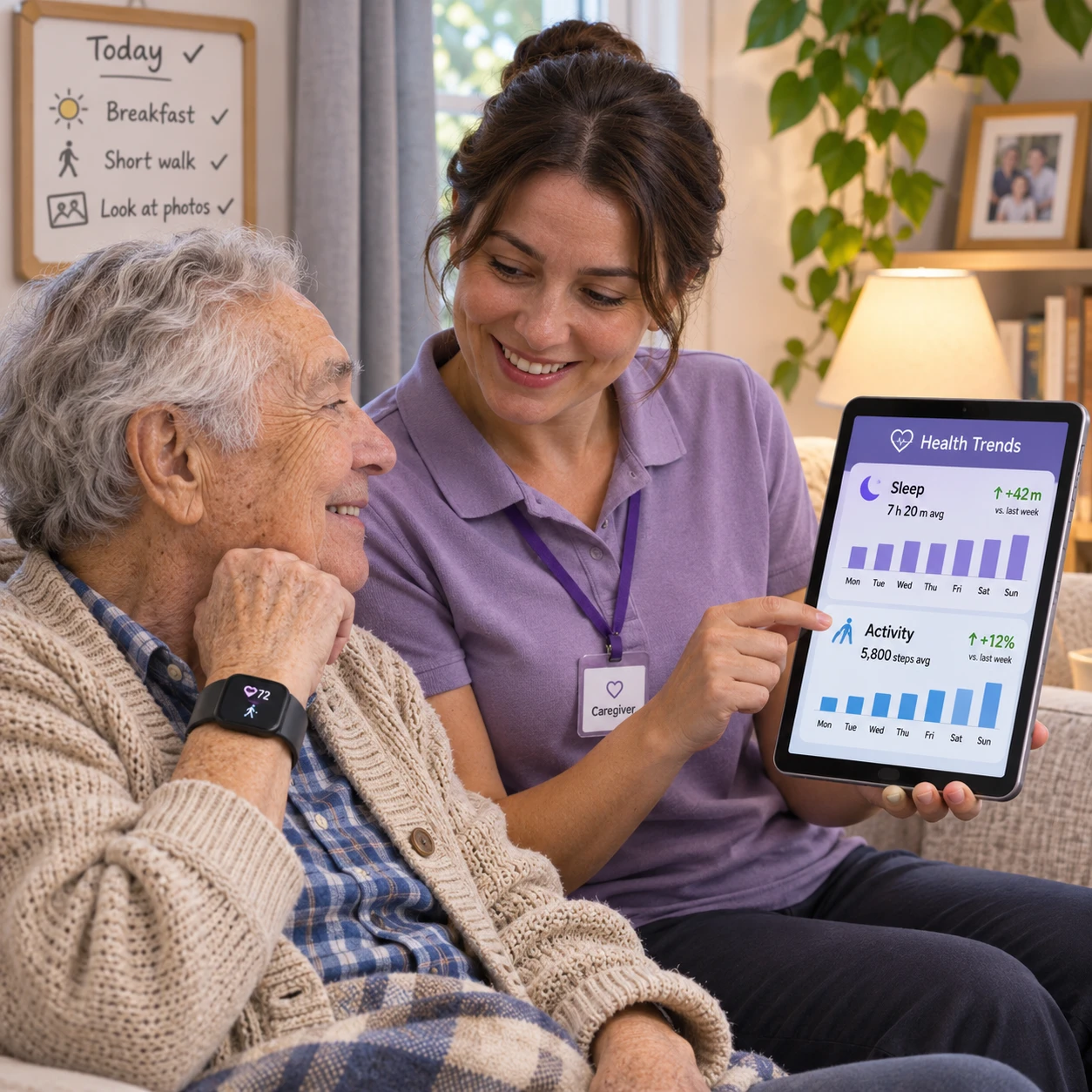
Biometric sensors can help caregivers see changes in a person’s health and daily routines that may be difficult to spot from occasional check-ins. In dementia care, wearable devices and other sensors can collect signals such as heart rate, sleep patterns, and activity over time. These readings offer context for care, but they do not replace conversation, clinical assessment, or human support.
What biometric sensors collect
Biometric sensors collect measurable body signals and movement data, with the exact information depending on the device. In dementia care, common measures include heart rate, sleep patterns, and activity or mobility.
A wearable device, such as a wristband or watch, may use optical sensors to estimate heart rate and motion sensors to record movement. Some products also estimate sleep periods based on movement and other signals. A sensor’s capabilities vary: a basic activity tracker may count steps, while a health-focused device may offer additional readings. Check the product’s documentation to see what it measures and how it defines each metric.
Other systems use sensors placed in a room or on a bed to record movement or nighttime routines without requiring the person to wear anything. These are not always biometric sensors in the strict sense, but they can contribute to continuous health monitoring by showing patterns in activity and rest. They generally cannot provide the same body measurements as a wearable.
Measurements are estimates, not a complete picture of health. A heart-rate reading may vary with movement, fit, or device design. Sleep estimates cannot confirm a sleep disorder, and activity data may miss movement when a device is not worn. Families should consider each signal as one piece of information, not a verdict.
How continuous monitoring works
Continuous monitoring typically follows four steps: a sensor records readings, a device or app processes them, the system displays trends, and selected changes may prompt caregiver alerts. The process and timing vary by product.
A wearable or environmental sensor gathers data at intervals or during particular events. It may send readings to a phone, a home hub, or a remote patient monitoring platform through Bluetooth, Wi-Fi, or a cellular connection. A dashboard can then display current readings or summaries, such as movement through the day or changes in usual sleep timing.
Some systems allow caregivers to set thresholds or receive notifications when a reading or pattern meets a defined condition. For example, a caregiver might be notified that a wearable has detected prolonged inactivity, if the device offers that feature. An alert is a prompt to check the situation, not proof that something is wrong. Connectivity gaps, a dead battery, or a device left off can also interrupt data collection.
Before relying on notifications, clarify who receives each alert, what action they are expected to take, and whether the system is monitored around the clock. A dashboard can make information easier to review, but it does not automatically ensure that anyone sees or responds to it.
Potential benefits in dementia care
Continuous monitoring may help caregivers notice changes in routines, activity, or selected health signals earlier than occasional observations alone. These patterns can support more informed conversations and day-to-day care planning.
For instance, a change in sleep timing or a sustained drop in movement may give a caregiver a reason to ask what has changed. The explanation could involve pain, a medication adjustment, illness, mood, a disrupted routine, or a measurement problem. Sensor data cannot determine the cause, but a timeline can help the person and care team discuss what they have observed.
Activity and mobility trends may also help families understand when support is needed during the day. Sleep summaries can prompt a review of nighttime routines. If a system offers caregiver alerts, they may help a family member check on a situation that warrants attention, provided someone is available to respond.
The value lies in context and follow-up. A useful practice is to record a brief note when a meaningful change appears, then compare the trend with observations, care routines, and clinical advice. Avoid reacting to every small fluctuation. Patterns over time are often more useful than isolated readings, though the right interval depends on the signal and the person’s circumstances.
Monitoring should support, rather than restrict, a person’s independence. It can inform care decisions, but it cannot guarantee safety, prevent emergencies, or replace regular contact and professional judgment.
Sensor types and practical considerations
Wearables are often suited to tracking personal signals such as heart rate and movement, while room- or bed-based sensors can monitor some routines without being worn. The best fit depends on comfort, the care goal, and the person’s daily habits.
- Wrist-worn devices: Convenient for activity and some heart-rate measurements, but they need a comfortable fit, regular charging, and consistent wear.
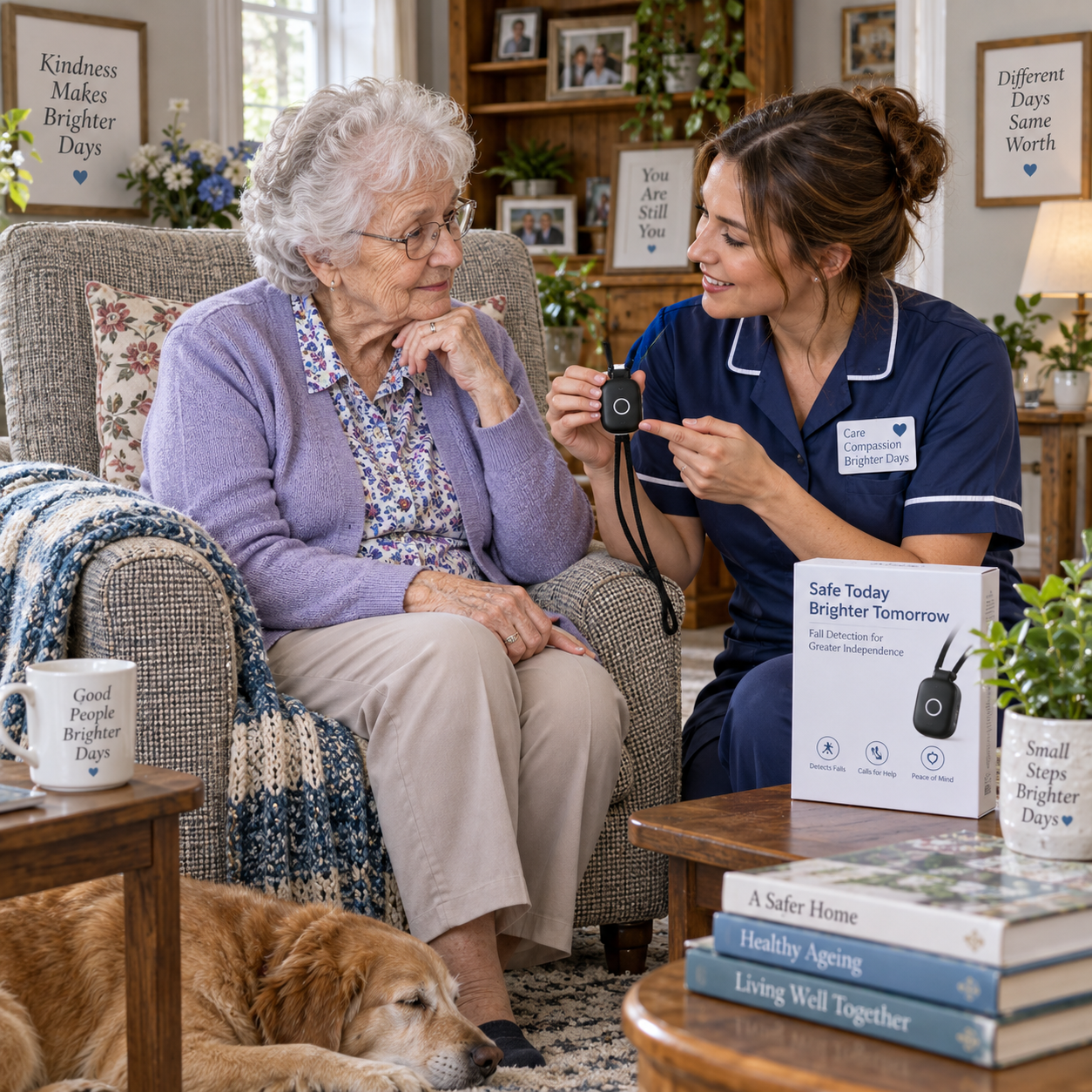
- Clip-on or pendant devices: May be easier for someone who dislikes a watch, though the person may remove or misplace them.
- Bed or room sensors: Can reduce the burden of wearing a device and may show movement or nighttime patterns. They usually provide less direct information about body signals.
- Connected monitoring systems: Can share readings with caregivers remotely, but depend on network access, compatible devices, and clear alert procedures.
Consider the whole routine, not just the feature list. Can the person put on, remove, and charge the device, or will a caregiver need to help? Is it comfortable during sleep? Does it require a smartphone or reliable internet? How long does the battery last, and what happens when connectivity drops?
Ease of use is especially important when dementia affects memory, dexterity, or tolerance of unfamiliar objects. A device with fewer features may be more useful if the person accepts it and the caregiver can maintain it. Wherever possible, try the sensor in everyday conditions before treating its readings as part of a care routine.
Privacy, consent, and responsible use
Responsible biometric monitoring begins with a clear care purpose, the person’s involvement, and limits on who can access the data. Families should explain what is collected, why it is collected, and how readings and alerts will be used.
When the person can make the decision, seek informed consent in language and a format they understand. Dementia does not automatically remove a person’s ability to decide; decision-making capacity can depend on the specific choice and may change over time. If a person cannot provide informed consent for a particular decision, involve the legally authorized representative and follow applicable law and care guidance. Continue to respect the person’s preferences, comfort, and dignity.
Ask the provider what data it stores, how long it keeps it, whether it shares information with third parties, and how users can delete or export records. Use strong, unique account passwords and enable available security features. Give access only to people who need it, and review permissions when care arrangements change.
Agree on boundaries before installation. For example, decide whether monitoring is limited to nighttime routines or remains active throughout the day, and explain how a caregiver will respond to an alert. If the device causes distress, discomfort, or a feeling of being watched, pause and reconsider whether the setup still serves the person’s interests.
Limits and questions to ask before choosing a system
Biometric sensors can miss readings, produce false alerts, and measure only a narrow part of a person’s health. Before choosing a system, ask how its data will inform care decisions and what its limits are.
Accuracy can depend on sensor placement, fit, movement, skin contact, and the device’s design. A missing reading may reflect a loose band or an uncharged battery rather than a health change. Conversely, an alert may be triggered by ordinary activity or a technical issue. Ask the provider how the product is tested, what its readings mean, and which features are estimates rather than clinical measurements.
Use this practical checklist when comparing options:
- What specific care question is the system meant to help answer?
- Which signals does it collect, and how often are readings recorded?
- Can the person use it comfortably and independently, or is caregiver help needed?
- What happens when the battery, internet connection, or sensor fails?
- Who receives caregiver alerts, and what response is realistic at different times of day?
- How are data access, retention, security, consent, and deletion handled?
- Can the person’s clinician or care team help interpret a concerning trend?
Do not choose a device solely because it promises more measurements. Start with a specific need, such as understanding sleep disruption or tracking activity changes, then select the least intrusive option that can reasonably address it. If a reading raises concern, use it to guide observation and contact an appropriate health professional rather than treating the device as a diagnostic tool.
Frequently asked questions
What health data can biometric sensors collect?
Depending on the device, biometric sensors may estimate heart rate and record movement or activity. Some wearables estimate sleep patterns, while room- or bed-based sensors may capture movement and nighttime routines. Not every device measures the same signals, and estimates can be incomplete.
Can biometric sensors detect or diagnose dementia?
No. Biometric sensors do not diagnose dementia. They may help caregivers observe changes in selected health signals or routines, but diagnosis requires assessment by qualified health professionals.
How can caregivers protect the privacy of collected data?
Limit data access to people who need it, use strong account security, and ask the provider about storage, sharing, retention, and deletion. Discuss monitoring with the person whenever possible and set clear boundaries for how readings will be used.
What should families consider when choosing a monitoring device?
Match the device to a specific care need, then assess comfort, ease of use, battery life, connectivity, alert handling, data security, and the person’s preferences. Confirm how caregivers will respond to alerts and how the care team can help interpret trends.