

How Online Casinos Like Slottica Are Leveraging Body-Tech Wearables and Biometric Data in 2026 to Enhance Player Experience and Responsible Gambling in the EU

I still remember the first time a friend showed me his smart ring flashing a gentle amber warning while he was three hours into an online blackjack session. It wasn't his bank balance that triggered the alert — it was his heart rate. That small moment, somewhere in a Warsaw apartment in early 2026, stuck with me. It captured exactly where the online gambling industry across the European Union is heading: a world where the device on your wrist or finger knows more about your gambling session than the casino's old-school 'time played' counter ever could. Wearables, once confined to step counts and sleep scores, are now quietly feeding data into gaming platforms, reshaping both how games feel and how player protection works. This shift raises an obvious tension — deeper personalization on one side, and privacy plus responsible gambling concerns on the other. This article walks through how that balance is being struck in 2026.
What Is Body-Tech Integration in Online Gambling?
Body-tech integration refers to the practice of connecting wearable devices — smartwatches, biometric rings, chest straps, even smart clothing with embedded sensors — to online casino platforms so that physiological signals can inform gameplay and player-care features. Instead of relying solely on clicks, deposits, and session length, operators can now access heart rate variability, skin temperature fluctuations, sleep quality, and stress markers. Combined with traditional behavioral analytics (bet size patterns, time-of-day play, loss-chasing indicators), this creates a much richer picture of how a player is actually feeling during a session, not just what they're doing.
From Fitness Trackers to Gambling Insights
The technical bridge here isn't as exotic as it sounds. Most wearable ecosystems — Apple Health, Garmin Connect, Oura, Fitbit — already expose APIs that third-party apps can request permission to read from. Casino platforms in the EU that experiment with this technology typically pull a narrow slice of data: resting heart rate, heart rate variability (a solid proxy for stress or arousal), recent sleep duration, and sometimes step count as a general activity indicator. None of this requires exotic hardware; it just requires the player to link an account and grant explicit permission, a process that mirrors connecting a fitness app to a food-tracking service.
Why EU Online Casinos Are Investing in Biometric Data in 2026
There are a few clear drivers behind this trend. First, competitive differentiation: in a crowded EU iGaming market, operators are looking for anything that makes their platform feel more attentive and modern than a rival's. Second, consumer expectation has shifted — players who use wearables in fitness, sleep, and productivity apps increasingly expect similar personalization elsewhere, including entertainment and gambling. Third, and arguably most significant, regulators across the EU have been pushing operators to strengthen responsible gambling tools beyond basic deposit limits and self-exclusion registries. Biometric input offers a genuinely proactive layer of harm reduction. That said, licensed EU operators are moving cautiously here, fully aware that health-adjacent data sits under some of the strictest legal protections in the bloc.
How Wearables Enhance the Player Experience
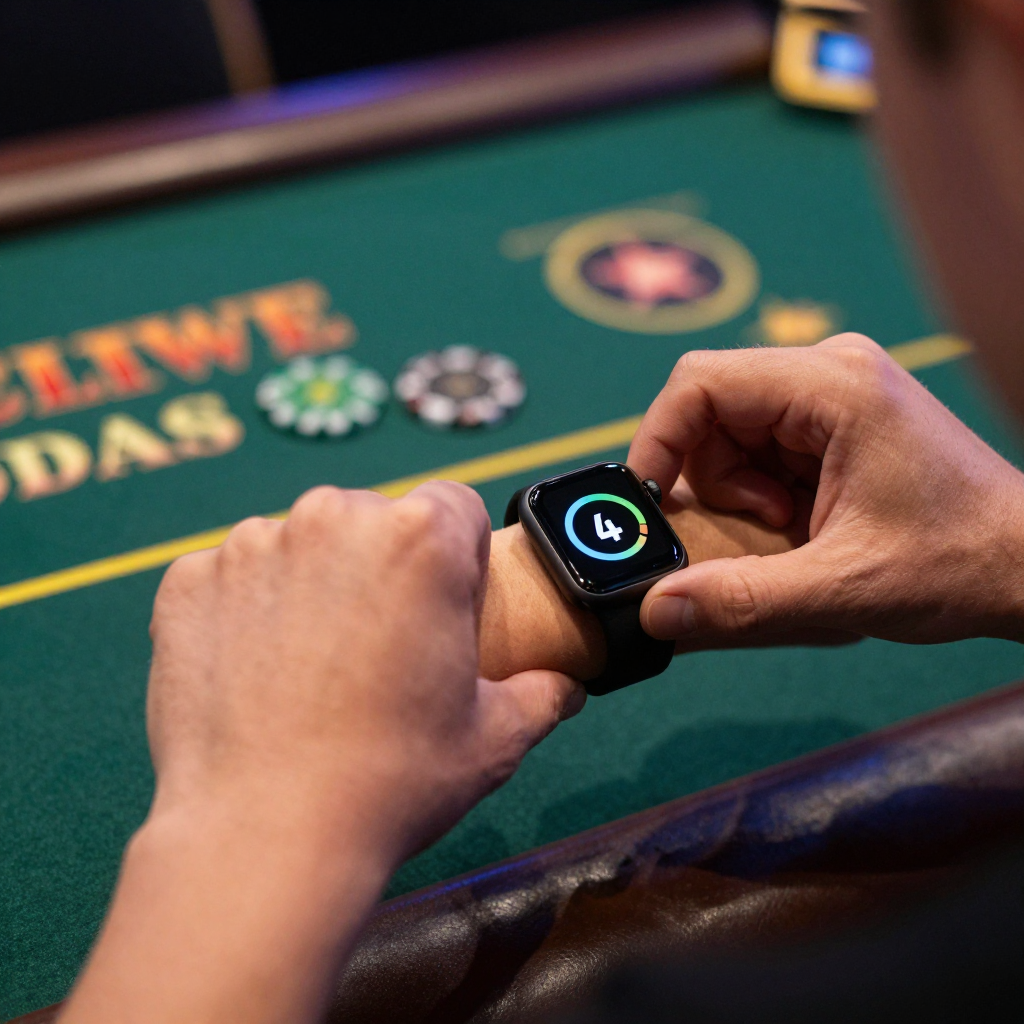
On the experience side, the applications are genuinely interesting. Adaptive game recommendations can shift based on detected arousal or stress levels — a player showing calm, steady signals might be offered a higher-variance slot, while someone showing signs of tension might be nudged toward a lower-intensity table game. Bonus timing can also become more thoughtful; instead of blasting promotions at random intervals, a platform might time a small reload bonus to coincide with a period when a player's biometric data suggests they're relaxed and receptive rather than frustrated. Session pacing tools can slow down bet suggestions automatically, and haptic feedback synced to a smartwatch can deliver subtle vibration cues — a gentle nudge rather than a jarring pop-up.
Real-Time Personalization in Practice
Picture this scenario: a player in Lisbon is on his fourth consecutive losing spin sequence at a slot game. His wearable ring detects an elevated heart rate combined with shallow, quicker breathing patterns — classic markers of rising frustration. The platform, with his prior consent, receives this signal and responds by softly suggesting a short break, dimming promotional banners, or automatically switching the interface to a 'cool-down mode' with lower stake suggestions. It's not intrusive; it's more like a considerate friend tapping you on the shoulder. This kind of real-time responsiveness is where the tangible player benefit lies — it's proactive care embedded directly into the moment-to-moment experience rather than a static warning buried in account settings.
Biometric-Driven Responsible Gambling Tools
Beyond in-session nudges, physiological data is increasingly feeding into structural responsible gambling mechanisms. Sustained elevated heart rate over multiple sessions, patterns of poor sleep correlating with late-night play, or cortisol-adjacent stress markers can trigger automated prompts for deposit limit reviews, suggested cooling-off periods, or even temporary self-exclusion offers. This isn't about punishing players — it's about catching warning signs that traditional metrics like 'time spent' or 'amount wagered' might miss entirely. A player might be within their deposit limit and playing for a modest 45 minutes, yet their body could be signaling exhaustion or distress that a purely financial dashboard would never flag. This biometric layer positions itself as a genuine addition to harm-reduction toolkits already mandated by EU gambling regulators, rather than a replacement for them.
Navigating EU Data Privacy Rules for Wearable-Linked Gambling
None of this happens in a legal vacuum. Under GDPR, health-related data — which biometric signals clearly qualify as — falls under 'special category data,' requiring a much higher bar for lawful processing than ordinary personal data. Operators must obtain explicit, informed consent, not a buried checkbox in terms and conditions. On top of that, the EU AI Act's provisions around algorithmic profiling add another compliance layer, particularly where automated systems make decisions (like triggering a self-exclusion prompt) based on biometric inputs. Licensed EU casinos experimenting with this technology are, understandably, treading carefully, often piloting features with small opt-in user groups before wider rollout.
Compliance Checklist for Operators
- Explicit, granular opt-in consent for each category of biometric data collected
- Anonymization or pseudonymization of data wherever technically feasible
- Clear, enforceable right to erasure upon player request
- Formal data processing agreements with third-party wearable platforms
- Independent audits verifying data handling matches stated privacy policies
Choosing a Wearable-Ready Casino: Tips and Resources
If you're curious about trying wearable-integrated gambling features, a few things are worth checking before opting in. Confirm the operator holds a valid EU gambling license, look for a clearly written biometric data policy (not vague marketing language), and make sure opting out is as easy as opting in — with no loss of core functionality if you decline. Platforms such as kasyno slottica have been publicly discussing early-stage wearable integrations, and independent tech-review resources are useful for comparing how different operators actually implement these features versus how they market them. Reading device compatibility notes and third-party analyses before linking your smartwatch or ring to any gambling account is a sensible habit, especially while this space is still maturing.
Conclusion
Biometric-enhanced gambling in the EU carries a genuine dual promise: richer, more attentive personalization paired with a meaningfully stronger layer of player protection. But that promise only holds within a framework built on real consent, transparent data practices, and strict regulatory compliance — not just clever marketing. As 2026 progresses, expect wearable integration to move from experimental pilots toward more standardized responsible gambling frameworks across licensed EU operators, with regulators likely codifying clearer rules for biometric data specifically in gambling contexts. Where this technology lands beyond 2026 will depend heavily on whether operators treat it as a genuine care tool or simply another personalization gimmick — and players would do well to keep asking that exact question.