Robotic Companions for Reducing Loneliness in the Elderly: Benefits, Limits, and Caregiver Guidance
Robotic companions are being explored in dementia care as one way to offer comfort, stimulation, and moments of connection. They may help some older adults feel less alone, but their value depends on the person, the setting, and the support around them. A robot cannot replace family visits, attentive caregiving, or meaningful human interaction.
Loneliness in older adults with dementia
Loneliness in older adults with dementia can affect emotional wellbeing and a person’s sense of connection, while social isolation may reduce opportunities for interaction. Consistent, respectful contact matters because dementia can make communication and familiar routines more difficult.
Loneliness and social isolation are related, but they are not the same. Someone may have regular visitors and still feel lonely; another person may spend time alone without experiencing distress. Dementia can also affect how a person recognizes others, follows conversation, or expresses a need for company. These changes should not be mistaken for a lack of interest in relationships.
Caregivers can look for changes in mood, participation, or daily habits, while avoiding assumptions about what those changes mean. A quieter day may have many causes, including fatigue, pain, hearing difficulties, or an unfamiliar environment. A companion robot may be worth exploring as one part of a broader approach to connection, not as a response to every sign of distress.
What robotic companions are and how they work
Robotic companions are devices designed to provide interaction or a sense of presence; socially assistive robots use interaction to support a person’s daily experience without necessarily performing physical care. Their features range from simple movement and sound to speech, reminders, or responsive behavior.
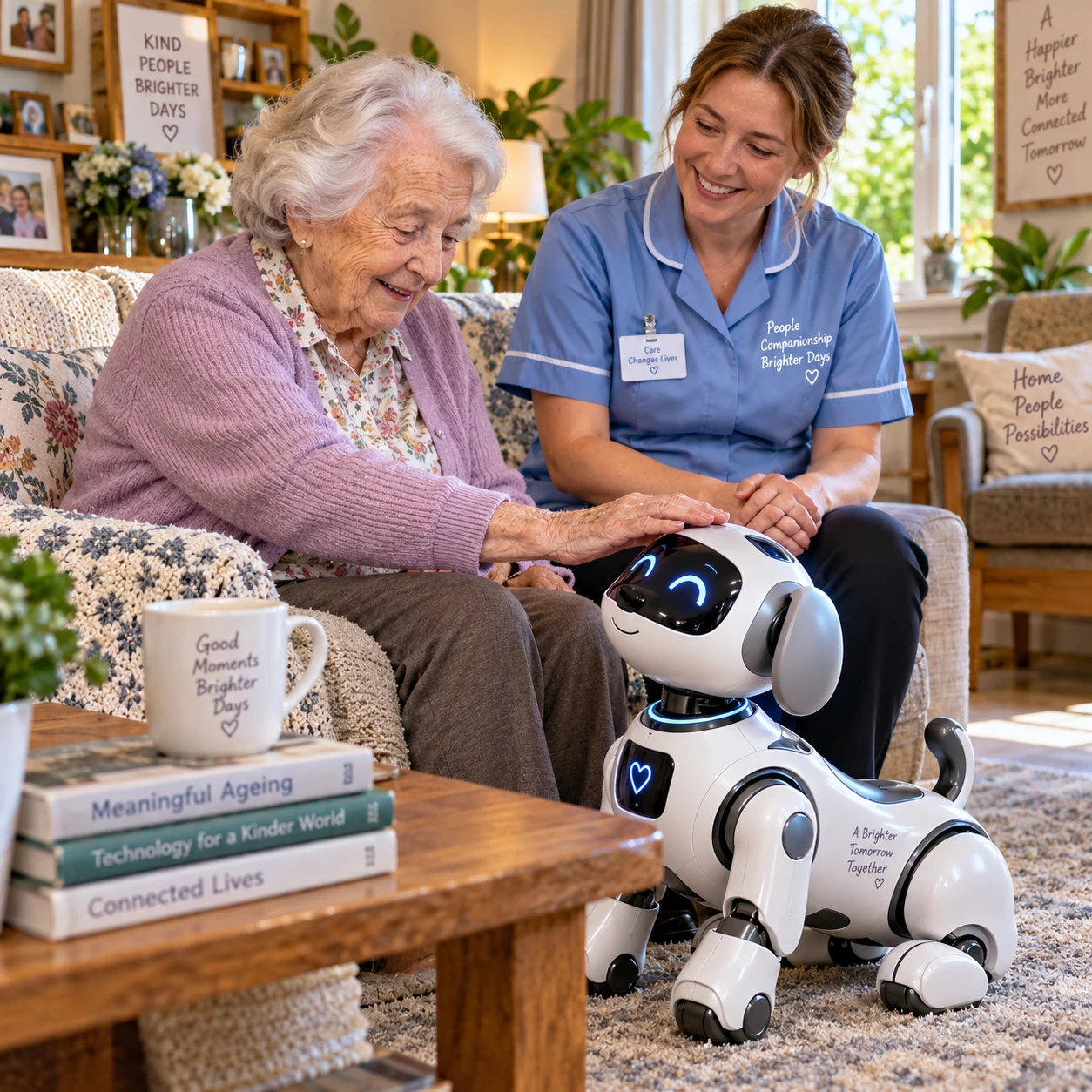
Some companion robots look like animals and respond to touch, voice, or movement. Others are tabletop devices or interactive speakers that can play music, offer prompts, or support simple conversation. A robot’s capabilities vary: some operate through preset responses, while others use sensors, software, or an internet connection. A conversational feature should not be assumed to understand a person’s needs or provide reliable health advice.
When comparing devices, ask what each feature actually does. Does the robot respond locally, or does it send recordings to an online service? Can reminders be customized? Is the sound adjustable? For dementia care, straightforward controls and predictable responses can be more useful than a long list of features. The simplest design may also be easier for caregivers to supervise.
How companion robots may support connection
Companion robots may offer comfort, encourage engagement, and create prompts for interaction, depending on the person’s preferences and response. They can support moments of connection, but they do not guarantee that loneliness will improve.
A familiar-looking robotic pet, for example, may invite someone to stroke it, talk to it, or sit nearby. Music or a gentle prompt may help establish a shared activity with a caregiver. A robot might also support a routine by playing a favorite song at a regular time. These uses can create opportunities for interaction, especially when a caregiver joins in rather than leaving the device to occupy the person alone.
Think of the robot as a conversation starter, not the conversation itself. If someone begins talking about the robot, a family member can follow that interest, ask about a favorite pet, or share a related memory. The robot can provide a focus for social contact; the human response gives that moment its context and meaning.
Results will differ. One person may enjoy a responsive pet, while another may find its movements confusing or its sounds irritating. Notice the person’s cues over several brief sessions, and stop if the device causes distress or agitation.
Benefits and limitations to consider
The potential benefits of companion robots include comfort, sensory engagement, and support for simple routines, while their limits include unpredictable responses and the inability to provide genuine human care. Their usefulness should be judged by the individual’s experience, not by the device’s feature list.
For some older adults, a robot offers a low-pressure activity that can be available between visits. Caregivers may also use it to invite participation in a shared moment. These are practical possibilities, not guaranteed outcomes or treatments for dementia or loneliness.
Robots cannot notice every change in mood, respond with human understanding, or take responsibility for care. A device that occupies someone for a while may be helpful in a particular moment, but it should not become a reason to reduce family contact, staff attention, or community activities. Human interaction remains essential.
Watch for downsides as well: a person may become frustrated when a robot does not respond as expected, mistake a device’s capabilities, or simply lose interest. Some devices also require charging, connectivity, setup, or regular maintenance. Choosing a robot for convenience means accepting these practical demands and the possibility that it may not suit the person.
Choosing and introducing a robot in dementia care
To choose and introduce a robot in dementia care, start with the person’s preferences, check that the device fits their abilities and setting, and try it gradually with a caregiver present. Treat the person’s reaction as the most important measure of success.
Use this simple fit check before buying:
- Preference: Does the person enjoy animals, music, conversation, or interactive objects? A robot that matches an existing interest is more promising than one selected only for novelty.
- Abilities: Consider vision, hearing, mobility, attention, and comfort with technology. Small controls, sudden sounds, or fast movement may create barriers.
- Setting: Check whether the device is suitable for the home or care facility, and whether staff or family can manage setup, cleaning, charging, and supervision.
- Practical needs: Review cost, ongoing fees, internet requirements, warranty, and data settings before purchase.
Introduce the robot in a calm, familiar place, during a time when the person is usually comfortable. Show it without pressure and explain it in simple language. Stay nearby, demonstrate one feature, and let the person decide whether to touch or use it. A short first session is often easier to assess than leaving the device on for a long period.
Afterward, note what happened: Did the person seem relaxed, curious, indifferent, or upset? Did the device prompt conversation or shared activity? Try another brief session only if the person appeared comfortable. If it is ignored or disliked, accept that response rather than insisting. Caregiver involvement helps distinguish genuine engagement from passive exposure.
Privacy, safety, and ethical considerations
Privacy, safety, and consent should be considered before a companion robot enters dementia care. Families and caregivers need to understand what the device records, who can access the information, and whether the person is comfortable with its use.
Some robots may use microphones, cameras, movement sensors, or cloud services. Before buying, ask whether audio or video is stored, how long data is retained, whether information is shared with third parties, and how to disable recording or connectivity. Read the privacy policy and settings rather than assuming a device is private because it looks like a toy.
Consent is an ongoing conversation. A person’s ability to make a particular decision may vary, so explain the device in a way they can understand and pay attention to verbal and nonverbal signs of agreement or discomfort. Involve the person as much as possible, and follow applicable care policies and legal requirements. For general guidance on dementia and person-centered care, consult the National Institute on Aging’s dementia resources.
Also check practical safety: stable placement, safe cables, appropriate volume, cleanable surfaces, and accessible controls. A robot should not obstruct movement or be mistaken for a real animal if that could create risk. Dignity comes first: explain the device honestly, protect personal information, and use it to support the person rather than to monitor or manage them without their knowledge.
Frequently asked questions
Can a companion robot replace visits from family or caregivers?
No. A companion robot may provide an activity or prompt a conversation, but it cannot replace the understanding, affection, and practical help people offer. Use it alongside human contact, not instead of visits or caregiving.
Are robotic companions suitable for everyone with dementia?
No. Some people enjoy them; others may feel confused, uninterested, or distressed. Suitability depends on personal preferences, abilities, the device, and the situation. Try a supervised introduction and respect the person’s response.
How should caregivers introduce a robot?
Choose a calm moment, explain the device simply, demonstrate one feature, and stay nearby. Keep the first interaction brief, watch for signs of enjoyment or discomfort, and stop if the person does not want to continue.
What privacy questions should families ask?
Ask whether the robot records audio, video, or other data; where that information is stored; who can access it; whether it is shared; and how to delete it or disable recording. Also check whether the device works without an internet connection.